
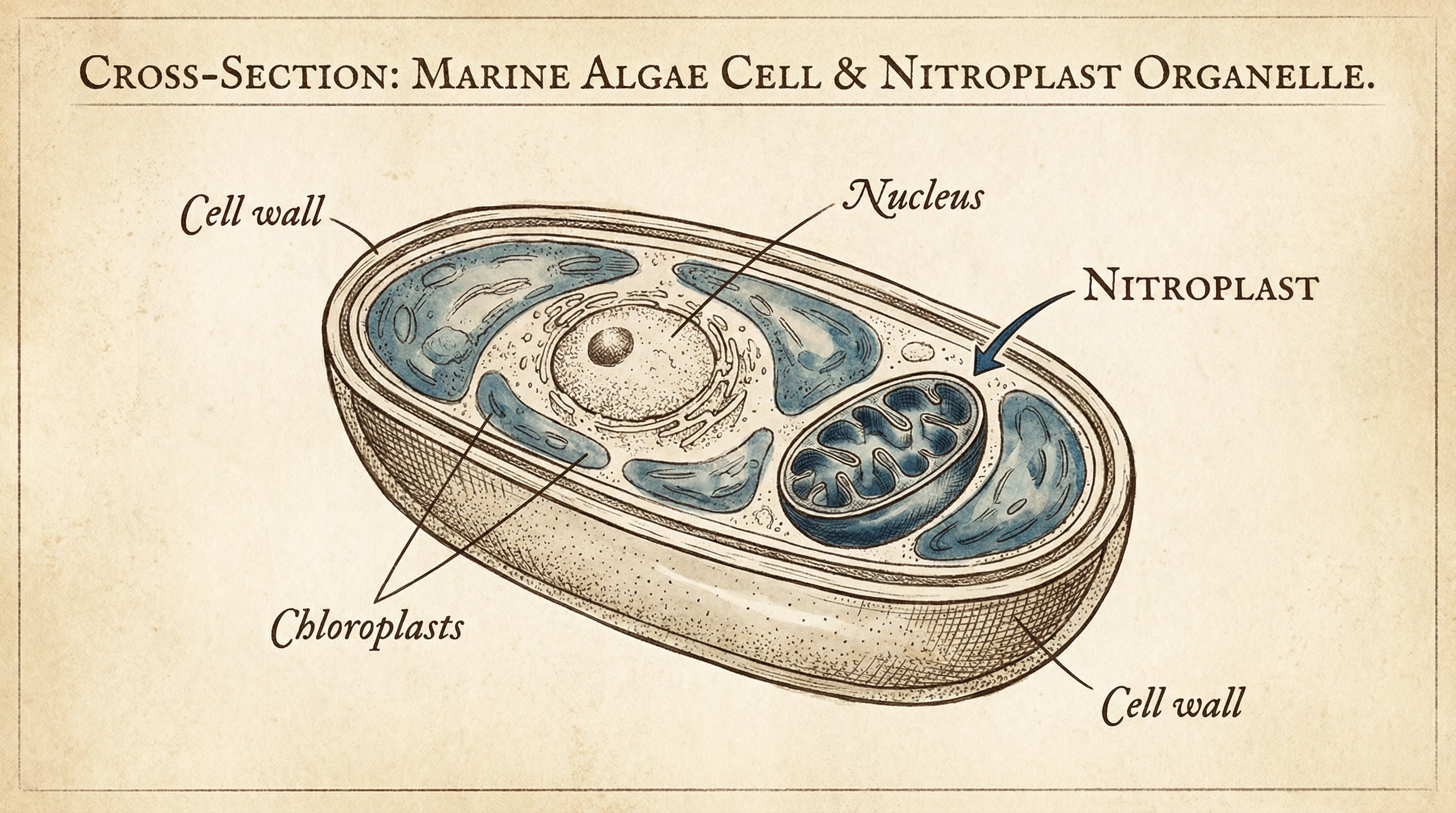
The Nitroplast: A New Organelle for Nitrogen Fixation
In a stunning discovery that rewrites textbooks, scientists have identified the first known nitrogen-fixing organelle in a eukaryotic cell. Dubbed the "nitroplast," this structure was found in the marine alga Braarudosphaera bigelowii.
From Endosymbiont to Organelle
Nitrogen fixation—the conversion of atmospheric nitrogen into biologically usable ammonia—was previously thought to be the exclusive domain of bacteria and archaea. While many plants form symbiotic relationships with nitrogen-fixing bacteria (like rhizobia in legumes), these bacteria remain distinct entities.
The nitroplast, however, has crossed the threshold from symbiont to organelle. Key evidence includes:
- Genome Reduction: The nitroplast genome has shrunk significantly, losing genes required for independent life.
- Protein Import: The host algal cell manufactures proteins that are imported into the nitroplast, a hallmark of organelle integration.
- Synchronized Division: The nitroplast divides in sync with the host cell, ensuring inheritance.
Evolution in Action
This discovery provides a rare, real-time glimpse into the process of endosymbiosis, mirroring the ancient events that gave rise to mitochondria and chloroplasts billions of years ago. It suggests that the evolution of complex cells is not a finished chapter but an ongoing process.